

This Sunday, I will once again serve as a Guardian for Honor Flight New England, escorting veterans to Washington, D.C., to visit the memorials built in their honor. I’ve made this trip multiple times, and there is a moment I have come to watch for at the Vietnam Veterans Memorial.
It happens at the Three Soldiers sculpture.
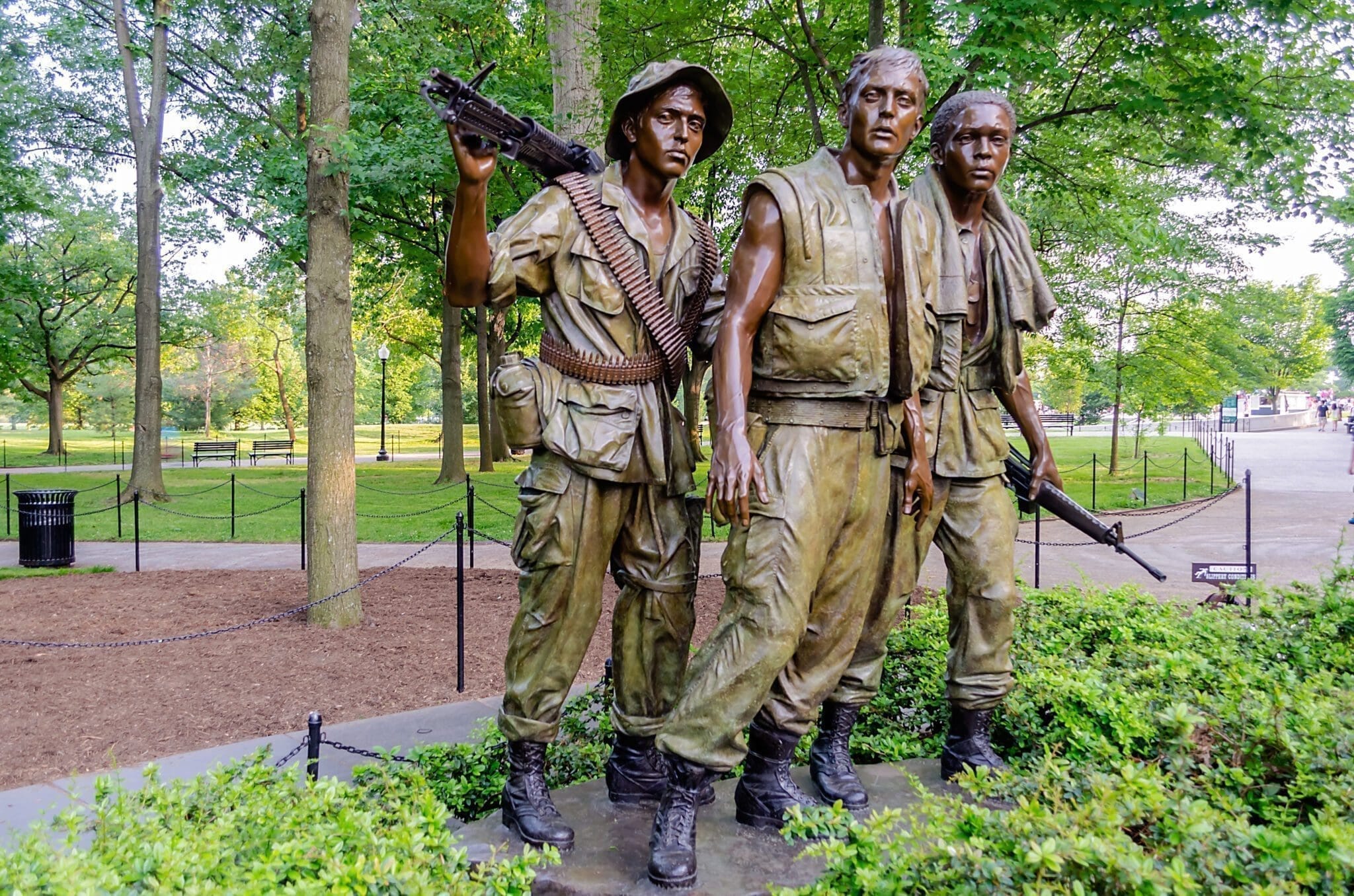
Frederick Hart’s bronze depicts three combat infantrymen, their expressions weathered, their postures carrying the exhausted vigilance of men who have seen too much. The detail is extraordinary. The work is universally acclaimed. The sculpture stands as one of the most recognizable pieces of public art in America.
And almost without exception, when Vietnam veterans stop in front of those three faces, they say the same thing.
“They got one thing wrong.”
Look at the Faces
If you have never stood in front of the Three Soldiers, look closely at the photograph above.
The three figures carry themselves with gravitas and self-assurance. Their jawlines are defined. Their expressions are composed and weathered, the bearing of experienced men who have processed what they have seen and found a way to carry it. There is strength in those faces, and a kind of settled maturity. They look like soldiers who know exactly what they are doing.
The average age of a Vietnam combat soldier was eighteen to nineteen years old.
That is the gap the veterans are pointing to. Not a flaw in Hart’s craftsmanship, which is extraordinary, but a gap between what the sculpture represents and what the veterans remember being. Hart gave them the faces of capable men. What the veterans remember are terrified teenagers trying to keep each other alive, with nobody older and wiser standing in front of them. They wanted experienced leaders. They got each other.
The sculpture, they say, shows the faces they wished had been leading them. Not the faces that were actually there.
That observation has stayed with me since the first time I heard it. Because it is a perfect description of the verification gap.
What the Sculptor Had
Frederick Hart worked from history. He had photographs, firsthand accounts, and years of careful research before he ever picked up a tool. He brought enormous talent and genuine intention to the work.
And yet the people who were actually there look at his bronze and immediately see what he could not have known from the outside looking in.
He had access. He did not have ground truth.
This distinction matters more than most people realize. Access is what we get from records, data, and external research. Ground truth is what you know because you were there, because you lived it, because the experience shaped you from the inside out.
You can have enormous amounts of access and still miss the thing that only ground truth can reveal.
Hart had photographs of young soldiers. But photographs capture posture and equipment and light. They do not capture the internal state of a nineteen-year-old trying to remember his training while everything around him is coming apart. The camera could not give him that. No amount of research could. And so, almost inevitably, what emerged from his process was the idea of a soldier, rendered with extraordinary skill. Not the boys themselves.
The Same Problem, Different Medium
AI language models are access engines of staggering scale. They have processed more text than any human being could read in thousands of lifetimes. They speak with authority. They produce fluent, confident, and often beautiful outputs.
And they have no ground truth at all.
This is what I call the verification gap: the space between what AI generates with confidence and what is actually true in the world. The gap is not always visible. Most people looking at Hart’s bronze see a masterpiece and move on. It takes a veteran, someone who was there, to see the boys who are missing from the bronze.
The question I keep returning to in my work is this: who is doing that looking?
The machine generates. The thinker decides.
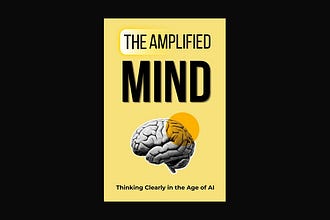
That phrase is the spine of my book, The Amplified Mind, and it lands differently every time I stand on the National Mall with a veteran and watch him search those bronze faces for something he recognizes.
He is doing the one thing AI cannot do. He is bringing the ground truth.
The Discipline This Requires
The veterans I escort are not wrong about the sculpture. Hart was not incompetent. Both things can be true at once.
What the veterans are demonstrating, sometimes without knowing it, is a cognitive discipline that is increasingly rare. They refuse to let the authority of the representation override the authority of their own experience. They look at three beautifully rendered, mature, capable faces and say: those are not us. We see the gap.
Most of us, most of the time, do not do this. We are trained by our information environment to defer to what looks authoritative. A fluent paragraph. A confident data point. A beautifully rendered bronze face. The form signals credibility, and we accept the signal.
AI accelerates this. It produces form that signals credibility faster and at greater volume than anything before it. And unlike Hart’s sculpture, it generates representations of things happening right now, in real time, at scale, on topics that affect decisions people are making today.
The verification gap is not an academic concern. It is an active force in how people receive information, form beliefs, and act on what they think they know.
What a Guardian Learns
I do not travel to Washington as a passive escort. I watch. I listen. I try to understand what these veterans carry.
What they carry, among other things, is the irreplaceable authority of direct experience. The historical record of that war has been analyzed, documented, memorialized, and argued over for fifty years. But the man standing in front of Hart’s bronze holds something none of that data has.
He has ground truth.
And the lesson I take back from every Honor Flight is that the amplified thinker, the one who uses powerful tools without surrendering judgment to them, is the one who never loses track of that distinction. Access is powerful. Ground truth is something different.
The next time you look at an AI-generated output that seems authoritative, ask yourself: am I the veteran in front of the bronze, or am I the tourist? Do I have ground truth here, or do I have access?
The machine generates. The thinker decides.
Those boys were never in the bronze. A Guardian learns to see what is missing.